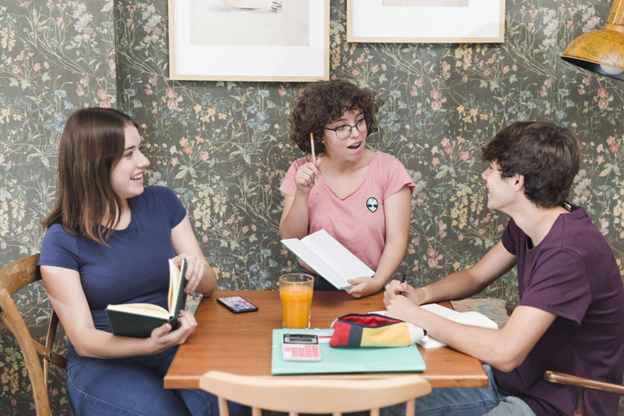
Families exploring trauma-responsive education models often turn to Alpine Academy Utah reviews as a starting point, not just to evaluate a school but to understand what actually helps students heal after adversity. A common theme in these reviews is that progress starts when learning goes from passive instruction to real-life experience.
Rather than relying solely on traditional instruction, trauma-responsive education emphasizes experiences that rebuild cognitive and emotional stability. In trauma-informed environments, experiential learning supports recovery by prioritizing:
- Emotional safety before academic demand
- Hands-on engagement over passive listening
- Real-world skill development instead of rote memorization
- Connection and regulation as prerequisites for learning
This approach is now widely recognized in trauma-informed practice as more than a teaching preference; it functions as a neurological and developmental framework that helps the brain relearn safety, curiosity, and trust.
Adolescence is a period defined by significant neurological change. The brain is still forming essential connections that support planning, prioritizing, decision-making, emotional regulation, and impulse control.
While teens may appear independent, the cognitive systems necessary for consistent self-management are still developing. When environments lack structure or predictability, stress systems in the brain activate, and the developing executive system retreats into survival-mode behaviors, avoidance, shutdown, impulsivity, or reactivity.
Structured routines are in place at Alpine Academy to support development by providing stability where internal processes are still evolving. Instead of relying solely on willpower or motivation, teens gain systems that promote regulation and consistency. Over time, routines become tools that are not imposed externally but internalized as lifelong habits.
Why Predictability Matters in the Developing Brain
The adolescent brain is especially responsive to environmental consistency. Predictable routines help regulate:
- Cortisol (stress hormone levels)
- Emotional responses
- Working memory
- Attention and focus
- Impulse control
When daily life feels predictable, the nervous system experiences safety. Safety allows the prefrontal cortex, the center of executive function, to stay engaged, rather than deferring decision-making to emotional or reactive systems.
Without predictability, the brain prioritizes uncertainty as a potential threat. In this state, even small tasks such as starting homework, getting ready in the morning, or transitioning between activities can feel overwhelming.
How Routine Builds Executive Function Skills
Executive functioning is not a single skill; it is a cluster of interdependent abilities. These include:
- Planning and time management
- Task initiation
- Self-monitoring
- Problem-solving
- Cognitive flexibility
- Working memory
- Goal-directed persistence
Structured routines reinforce these skills through consistent repetition. Instead of abstractly teaching time management or organization, predictable habits allow teens to practice them in real time.
Some core executive functions that benefit from routine include:
- Task Initiation: Knowing what happens next removes decision fatigue and makes starting easier.
- Working Memory: Repeating steps in a predictable order strengthens retention and recall.
- Organization: Routine provides mental categories, morning tasks, school blocks, and evening transitions.
- Self-regulation: Predictable patterns reduce emotional volatility and support stable pacing.
Over time, routines become scaffolding for independence, ensuring teens develop both confidence and competency.
Routine as a Form of Emotionally Safe Structure
For teens experiencing stress, anxiety, trauma, or emotional dysregulation, unpredictability can amplify distress. Structure provides emotional containment. It communicates:
- The day is manageable
. - Expectations are clear
. - Transitions will not be sudden or overwhelming
. - Support is consistent
.
This sense of safety allows teens to shift from reacting to experiences toward engaging with them. Emotional predictability does not remove challenges; it provides a steady foundation so challenges feel navigable.
Elements of Effective Routine for Adolescents
Not all routines are equally supportive. The most effective approaches blend flexibility with consistency and allow teens to experience ownership rather than pressure.
Key components often include:
- Clear expectations and timelines
- Consistent morning and evening rhythms
- Built-in transition times
- Predictable school and homework schedules
- Time for rest, self-care, and decompression
- Healthy structure around sleep, movement, and nutrition
A supportive routine reflects balance, not rigidity. It replaces stress-driven unpredictability with compassionate order.
Building Internal Motivation Through Structure
Motivation is often misunderstood. Many assume teens lack motivation, when in reality, motivation often breaks down due to cognitive overload, emotional exhaustion, or unclear expectations.
Predictable routines support motivation by:
- Reducing overwhelm
- Breaking tasks into manageable patterns
- Creating positive momentum
- Normalizing effort and responsibility
- Making progress visible
When teens know what to expect, their energy shifts from coping to engaging.
How Structure Encourages Future Independence
While structure may appear externally imposed, it serves a larger goal: internalization. As routines strengthen executive functioning, the skills eventually transfer from schedule to mindset. Over time, teens recognize:
- How to plan ahead
- How to manage competing responsibilities
- When a task needs to be broken down
- How to regulate emotional reactions to stress
- What strategies help them succeed
This process is gradual and nonlinear, yet deeply impactful.
Supporting Structured Routines With Compassion
The goal is not to force compliance but to guide development. Compassion ensures routines feel supportive, not punitive. When teens feel respected, included, and understood, structure becomes a partnership rather than a power struggle.
Helpful approaches include:
- Collaborating on routines instead of dictating them
- Modeling flexibility when life changes unexpectedly
- Celebrating consistency rather than perfection
- Acknowledging emotional challenges without removing expectations
Predictability paired with empathy creates an environment where learning and regulation can thrive.
Conclusion
Structured routines are not simply organizational tools; they are neurological supports for a brain still developing critical executive functioning systems. When predictability replaces chaos, the nervous system settles, the mind focuses, and the adolescent begins building lifelong skills of regulation, responsibility, and resilience. At Alpine Academy, we strive to teach skills that are sustainable long after students leave our care. With compassionate structure, teens are not just completing tasks; they are strengthening the foundations needed to navigate adulthood with clarity, confidence, and capacity.